[tech] Bitdinar write-up
Bitdinar so far.
![[tech] Bitdinar write-up](https://storage.ghost.io/c/58/a2/58a221e1-d876-4851-8e18-998779ea9849/content/images/size/w1200/2026/05/Screenshot-2026-05-07-at-12-39-52-Ghost-Admin---VINK-IO.png)
TL;DR
This actual post is long due as it bridges to the technical aspects of our solutions.
We will try to summarize the outcome of the past development and research efforts, during the last years in the context of the Bitdinar project .
In this section we will present the progress done so far, since 2016, in developing different applications and front-end solutions.
Prototype applications:
This section provides an overview of the prototypes, and software stacks, we have developed under the brand name Bitdinar. We aim to monetize on our past experiences and develop a robust system, as a commercial continuation of our digital currency concept.
Prototype 1: Bitdinar blockhchain application
We first started with a blockchain version of a digital currency called Bitdinar.
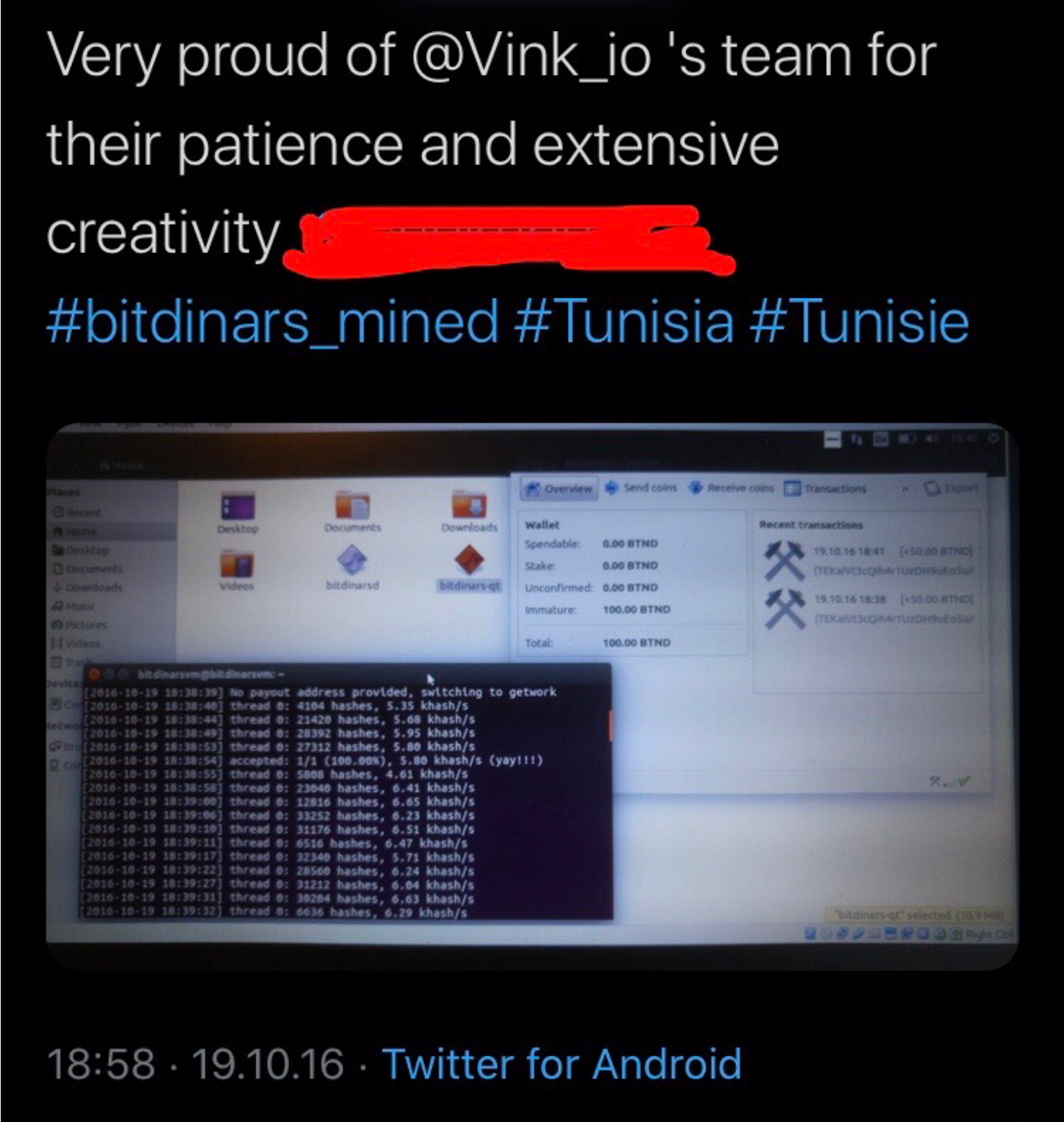
The picture below depicts the mining process of the Bitdinar crypto-currency, a fork of the bitcoin stack, with a slightly more performant consensus algorithm. The code lives on several deprecated repositories.
The Bitdinar network was composed of two machines located respectively in Berlin, Germany and Tunis, Tunisia. We effectively built a blokchain, and the nodes connected were validating transaction and earning coins in the same fashion as bitcoin.
The solution was composed of a backend component that shares the same logic as the bitcoin crypto-currency; and a front-end component which is represented in the picture. The front-end is composed of a linux terminal client, and wallet built using the qt framework.
Of course the data in-transit relayed between the Bitdinar nodes composed the network.
Prototype 2: Bitdinar mobile wallet application
After the success of the first experiment, we have started to work on a mobile wallet, that would emulate any payment wallet, with interoperability with modern stacks.
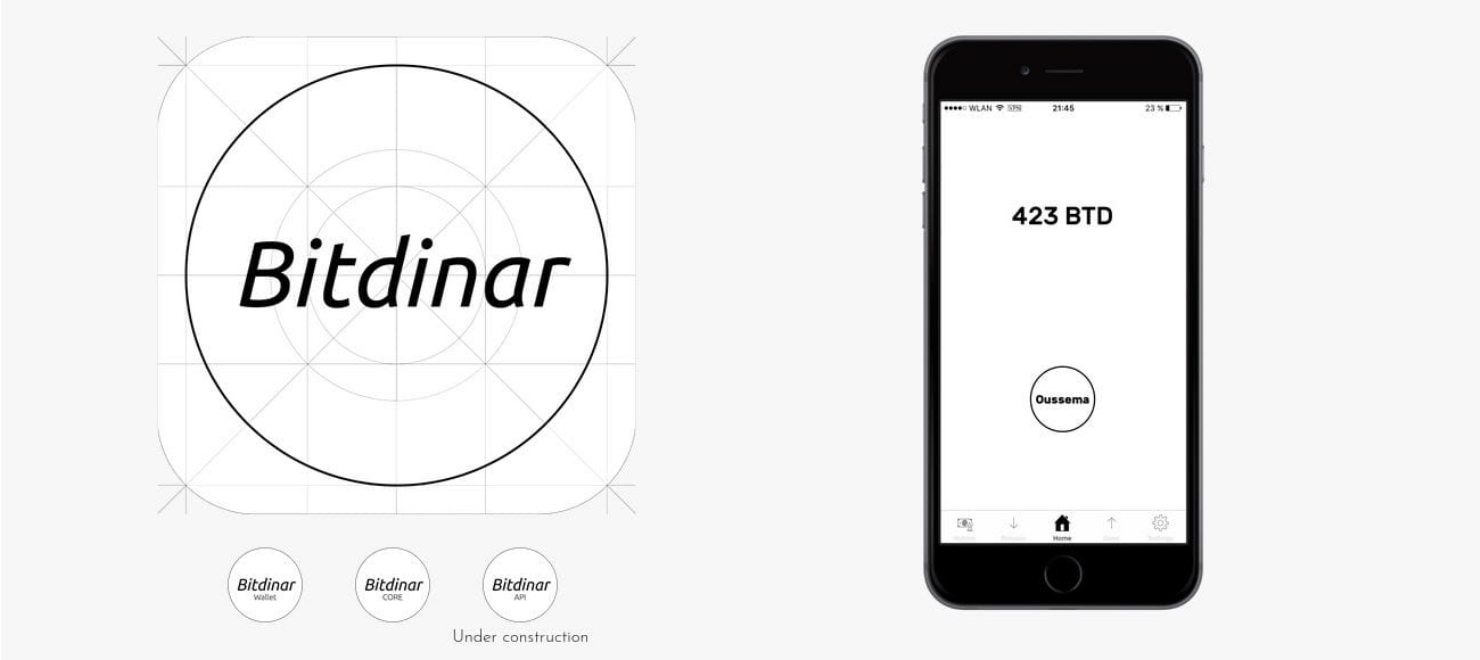
The settlement protocol was based on a centralized server-client architecture.
For this prototype we have collaborated with a team of Italian bitcoiners who had a great deal of experience in UI and UX. The focus of the mobile experience was to provide a simple-to-use payment mobile application, that would make mobile payments seamless, and simple to understand for users, even if they do not have a technical background.
It is possible to see how the application functioned in the video below:
UI / UX of the Bitdinar mobile wallet
Prototype 3: Bitdinar web-banking application
To complement the mobile application, we have also built a web-based banking solution that is very similar to paypal, consuming the Tunisian Poste banking API, thus was using the e-Dinar framework.
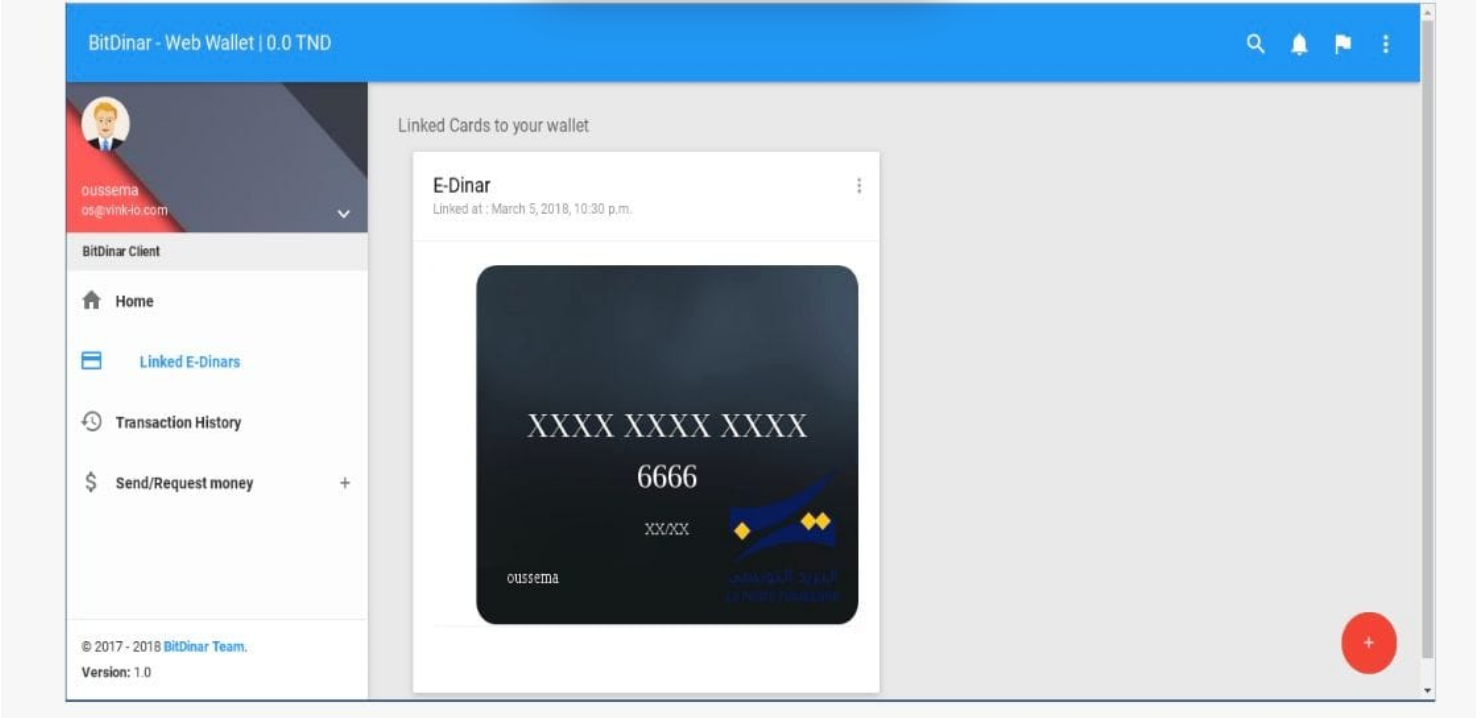
The web application used to live on the https://bitdinar.tn website, and the user could start a profile, connect his Poste issued credit card, and make transactions (receive and send funds).
We used the Django framework to build this application, and it was run with the tremendous support of the aurax.io team in Tunis.
Conclusion
We hope the post above help to establish our profound understanding of payment stacks, and we hope it demonstrates our capacity to build solutions that are forward-looking and comprehensive.
We continuously increase our knowledge base, by tinkering and breaking and rebuilding those systems.
Our teams are working hard to provide a robust demonstration of our latest applications for our audience, and we will be able to test latest the front-end application as soon as possible.
We are building on our past experiences, to provide the best solutions available.
![[tech] Portfolio of bitdinar mobile applications](https://images.unsplash.com/photo-1571840615771-acc2e9f42641?crop=entropy&cs=tinysrgb&fit=max&fm=jpg&ixid=M3wxMTc3M3wwfDF8c2VhcmNofDE0fHxiYW5rfGVufDB8fHx8MTc3ODQwOTk1Nnww&ixlib=rb-4.1.0&q=80&w=600)
![[strategy] Tunisia: Business landscape and technical infrastructure](https://storage.ghost.io/c/58/a2/58a221e1-d876-4851-8e18-998779ea9849/content/images/size/w600/2026/05/Screenshot-2026-05-07-at-12-48-16-Ghost-Admin---VINK-IO.png)
![[tech] Bitdinar: A PoC mobile wallet](https://images.unsplash.com/photo-1606340671662-27ee685dd111?crop=entropy&cs=tinysrgb&fit=max&fm=jpg&ixid=M3wxMTc3M3wwfDF8c2VhcmNofDExNXx8ZWxlY3RyaWNpdHl8ZW58MHx8fHwxNzc4NDEwODk2fDA&ixlib=rb-4.1.0&q=80&w=600)
![[tech] Bitdinar: An experimental centralized crypto-currency](https://images.unsplash.com/photo-1467380119941-dc5acf7c6325?crop=entropy&cs=tinysrgb&fit=max&fm=jpg&ixid=M3wxMTc3M3wwfDF8c2VhcmNofDkzfHxlbGVjdHJpY2l0eXxlbnwwfHx8fDE3Nzg0MTA4OTZ8MA&ixlib=rb-4.1.0&q=80&w=600)